


Jealousy, Farming Operations in Zambia.

Every time I sit down and write this blog, I subconsciously think about how well Cathy Buckle and my old friend, Andrew (Goose) Shaw write their posts and, importantly, how much they can convey in so few words.
“The fish have not learned that the crumbs are a trap,” the man said and we both shook our heads sadly. This time the crumbs, otherwise known as bribes, are wheelbarrows, solar panels, fertilizer, money, food and drink.” - Cathy Buckle writing how the party is bribing the people to extend the President's and government's terms in office.
Perhaps it is because I do not spend enough time on it, or perhaps I just do not have their writing talents or English-language skills. Whatever it is, I am jealous of their talent. I suppose I could spend more time on composing and editing, but then it would not be spontaneous, and when it is, your recollections or thoughts remain untainted by editing or, more importantly, by a flawed elaboration of the thought process into multiple edited words. So yes, I am jealous of their ability to convey their messages or how they see the world. This week, while skimming social media, I saw a young farmer in an onion field with the caption "The New Breed of Farmers in Zimbabwe." No surprise, he was white, as many of the new farmers on our land are white, showing no regard in farming for whose land it is and legally still belongs to.

“Those farming on our land must have a blanking mechanism to shut out the fact that by doing so they are paying the thieves to take it. It is like hiring a stolen car which I am sure all would claim they would not do.” - Peter Mcsporran
In doing so, I was struck by a momentary jealous feeling brought about by the fact that he was farming, and more importantly, he had the youth to do so, despite the many challenges he faces. As I say, the jealousy was momentary, but the melancholy that followed, from not being young and farming in Zimbabwe, lasted much longer. I chide myself, I should be happy that I did farm in my heydays in Rhodesia and Zimbabwe and in any event, I am now too old to farm in any circumstance, so perhaps the jealousy was more about the loss of my own youth. I then thought back to what Cathy and Angus wrote in their latest posts about the reality of living in present-day Zimbabwe, the poor roads, the shortages, the double standards for the rich and poor, and most importantly, by describing the latest extravagant wedding to have taken place there, the corruption. Then it made me think: what has that young man got to do or pay to keep the land, his or whoever it is or isn’t? Corruption costs everyone in Zimbabwe; perhaps the most honest about it was Dave Clements, who described it to me as a form of taxation, something that has to be paid if you choose to carry on living in that once great country. So perhaps, my twinge of jealousy was probably misplaced, but the melancholy, not.

Funnily enough, I am not jealous of Elon Musk and all his money, or at least the paper value. Rather, the more he does, the more I admire him. When we first moved to Portugal, our village was not served, nor is it now, by carbon fibre internet, and we had to rely on a poor service from the mobile phone companies, which at best offers two bars at our house. Then came along a game-changer, Starlink. As a beneficiary of this service, it seems so simple until what has to be done in the sky to create the platform that the service offers, it becomes mind-boggling. Forget the change it made to our life, how much of a change has it made to the more isolated areas of the world and for me, I think especially of rural Africa. Mobile phone towers are built only when there is lucrative income and many subscribers; Starlink's broad footprint does not. It is global. Getting away from these individual customers, what about the impact on communications on ships and aeroplanes? What about its impact on Ukraine’s efforts to halt the Russians? I am not a fan of electric cars, so the Tesla saga did not excite me. I suppose they are with us now because of the hype about our impact on global warming, despite the world being unable to reach a comprehensive solution to reduce that impact. But now I know the electric car was only the first step in his path to developing robots and other technology that I have little doubt will have an impact on all of us in the future, and not too distant a future. I do not even disagree with his politics or his calling out of governments and bureaucratic inefficiencies. subscribers
“Musk’s unique talent is not just his thinking out of the box, but also his ability to raise funds for the implementation of his futuristic visions.” - Peter McSporran
On the farm at Chisamba in 2003, things were moving fast. Graham Rae was pushing hard to get the dam complete, and with four tobacco sections to be built, it was decided I was needed back on the farm to supervise the tobacco and complete the tobacco curing system while Graham commenced installing the irrigation.

So, Rozanne and I moved back to one of the old farmhouses on the home section, Penyaonse. In doing so, we moved my few remaining belongings from Zimbabwe using my old farm cold truck, which I had used for our floriculture enterprise, and this was done by Bill Claxton and his son Richard. Bill was a well-known tobacco farmer at the far side of Darwendale from where I farmed, but I knew him as a friend, and he was also close friends with my in-laws, the Carys, who lived just down the road from him. As the vehicle came in temporarily, we planned to keep it in Zambia and sell it to Zambeef at a discount, leaving them the headache of registering it there. After all, in Zimbabwe, it was of little use or value at that time. Such vehicles were rotting in warehouses or on sites throughout the country, abandoned by their former farming owners.
“The smouldering anger of what was done to us, white and many black opposition farmers, in Zimbabwe, will never leave us. Not just for our loss, but the wanton destruction of our assets, including the tools that generated jobs and wealth for the many in the country. Their destruction brought about the nation's downfall.” - Peter McSporran
Initially, we planned three sections, each about eight hectares, but Graham, if nothing else, liked to do things on a grand scale and convinced us to lease another farm, Triangle, with some old barns and a small dam. Two of the other sections had barns that could be converted to chongololo forced-air curing systems by adding either batch or bulk curers to meet the curing requirements, while the fourth section would be completely greenfield. It was crazy! Here we were, in one year, building four chongololos, two large-batch curers, and installing about twelve bulk curers; the latter would be easy. We also had to build suitable storage sheds on all the farms, each capable of storing 250,000 kilograms of tobacco and also space for grading the same said tobacco. The biggest challenge was using builders who had never seen a tobacco farm, let alone understood the concept of forced-air curing systems, the complex ducting and control vents required and the accuracy of build to ensure sealing. Each section got a manager.
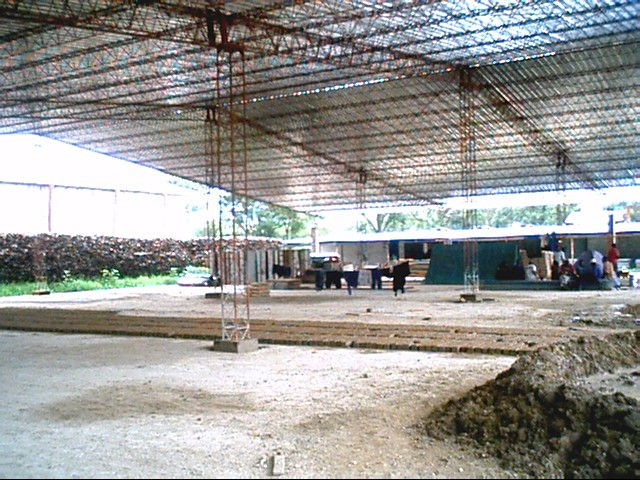
Dave Craft remained with us, and we further employed Keith Laurent on Marula Farm, the red-soil part of our farming enterprise, and installed our first pivots there, supplied by underground water. This farm, in the whole twenty thousand hectares, was the only one with underground water to do so. In the meantime, we were busy clearing bush and flattening anthills across some 240 hectares for the installation of centre pivots and the planting of our tobacco crop. Little did we know in our craziness we were probably instigating our failure then, as the year progressed, the Rand unbelievably strengthened against the dollar from being just under twelve to one at the beginning of the year to by the end of the year, 2003, under six to one. All our equipment and inputs for our first year, the year we capitalised hugely, doubled in price in US$ terms between order and delivery, as our loans were in US$. Of course, that meant going to our sponsors with a cap in hand for more money, a painful exercise, but not as painful as paying it back with our tobacco sales, which were also in US$.
Disclaimer: Copyright Peter McSporran. The content in this blog represents my personal views and does not reflect corporate entities.


Comments