


The Inevitable Happens and Some Memories of Kariba.
"The tragedy on Lake Kariba last week, or some similar type of tragedy, was inevitable, but the circumstances causing it were not. The root causes was poor or total lack of governance and corruption."-Peter McSporran
The definition of inevitable in the Cambridge Dictionary is "certain to happen and unable to be avoided or prevented." The following is only my conjecture on what I think contributed in part, or may be all included, in the events leading up to the recent Kariba ferry sinking, with the death of some 90-plus people, including many children. Ah, you say it could have been prevented, so "inevitable" is the wrong word. Yes, the accident could have been prevented; anyone can see that from the evidence already available from survivors and witnesses in that: they say the ferry was old, was poorly maintained, actually probably had non-existent maintenance, the captain ignored the warnings put out by various groups on Kariba that day, he allowed his ferry to be overcrowded with likely more than double the passenger licensed capacity, along with goodness knows how much cargo, which would include supplies for the fishing villages up the lake, and the passengers personal belongings. I agree that, if there was the will and the responsibility by its owners, that being the Government, it could have been prevented. In this case, the Government owns the ferry, and its agencies are responsible for all the aforesaid, leading to the accident. There is no doubt in my mind they knew the ferry's condition, and that on most trips for many years it was overcrowded. It now seems the Government, all the way to the top, knew the ferry was no longer capable of safely carrying out its purpose; in fact, a report flagged this some five years ago. Ministers, local MPs, and civil servants had neither the mind nor the will to prevent this disaster. After all, it is only serving a fishing camp where subsistence fishermen are trying to eke out a living, as there is no formal employment available, unless you are lucky enough to get a job on a privately owned houseboat or kapenta (sardine) rig or as a civil servant. There are plenty of the latter, and the work is easy, but you need connections and at least a party card.
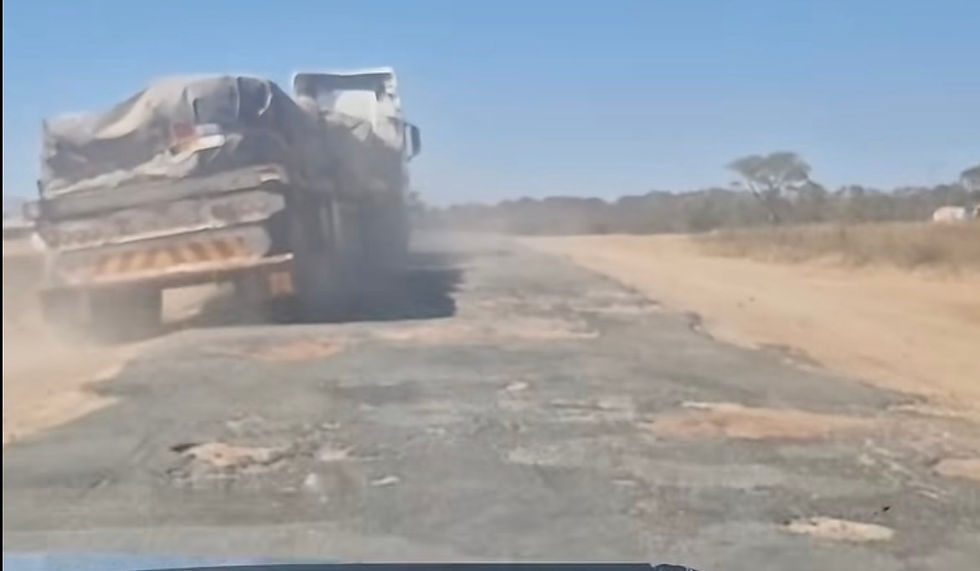
Kariba sits on the northern border of Zimbabwe, far from the seat of power in Harare, and is accessible only by one very poorly maintained road that I remember back in the day was immaculately maintained. Once again, the Government prioritises its own individual interests over the people it is meant to serve. Never mind that this road is the only access road to the market or for transporting purchased inputs such as fuel, private service agencies, and everyday household goods. Even ambulances have to use it to take the very sick to the hospital in the city, where there may be a chance of treatment, unlike the underfunded rural hospitals. Although there is an airfield, only the rich could afford to fly and certainly too expensive to fly fish and bring in groceries.
As an aside, I later mention the Sea Lion in this blog, which was built in Zimbabwe and launched in 1974, so that makes it older than the Mbuya Nehanda by at least ten years, but having private and responsible ownership, it has been kept well maintained, with at least one full refurbishment I know of, with new engines installed. So age should not be blamed as the reason, but rather lack of maintenance and not abiding by the Government's own rules which apply to commercial boats on Kariba. The Government has been quick to blame the captain and say the vessel has a seaworthy certificate, which is easy to produce when the issuer and owner of the vessel are one and the same. As I say, these are only my thoughts; I would accept an independent investigation to prove me wrong, as a government investigation is very unlikely to publish the truth.
The ferry in question is over forty years old, and I am told it has had little or no maintenance; unless you count a piece of wire and some ‘rekken’ (tyre tube rubber) as a quick fix as maintenance. Be it a car, bus, tractor or boat, these are the go-to fixes in Zimbabwe. The Government, in its own in-house report, said the ferry should be upgraded, probably replaced or at the very least have major overhauls, including an engine replacement that would cost some US$40,000. Not a lot of money in today's terms. Of course, this requirement immediately puts the politician, and, for that matter, the civil servants who owe their jobs to being subservient party members, in a quandary: how to fund this, as most of the state's revenue is swallowed by that animal called corruption. The other quandary is who in the Government with the required knowledge is going to ask, let alone convince those in power, who are the benefactors of the said corruption, to divert the money needed away from their own pockets to provide a vital service for those living on the lake. No one, I am afraid, and if it were allocated, it would probably disappear long before any such ferry was built, let alone transported to Kariba, an extremely difficult task now that the roads are so poorly maintained. Further, you would need a skilled boatbuilder capable of building a ship of this size in modular form to allow transport on the very windy road to Kariba. Do these skills still exist in Zimbabwe? Will there be tender procedures, and if so, how long will that take? Who has the answer to these questions? Certainly, it would appear not the President, who went to Durban to attend some political shindig event rather than deal with the plight of many thousands of people, that being the families of the victims and all those that rely on the ferry service for their survival. I wonder how long this will take now that the ferry has gone? No doubt some privately owned ferries or houseboats will be hired or even commandeered to fill this need. After all, these are all maintained and up to safety standards, as inspections of these are a means of getting revenue in a corrupt society, similar to roadblock vehicle inspections.

To give you an idea of their lack of sense of empathy and responsibility to those who have lost their lives and family members, the Government has offered a miserable US$100 to the families of each victim. Is that the value they place on their constituents? I am afraid so. Mind you, in the UK, after nearly twenty-five years, some sub-postmasters still have not been fully compensated, despite the scrupulous accusations and legal proceedings brought against them by Post Office officials. Yes, these officials are once again, including many government employees and nominees. Perhaps corruption isn't so obvious in the first world, but let me assure you: where there is government involvement, there will be some form of corruption.
Oops, I am wandering again. Anyway, no doubt they will find the money now for a new ferry, probably only one, but in reality they need at least two to allow for breakdowns and maintenance so the event is not repeated. Just look at how bad CalMac's services are in Scotland, with ferries down for maintenance or breakdowns despite owning 37 ferries to serve the Western Hebrides. Once again, CalMac, as a quasi-government-owned company, serves sparsely populated rural communities that rely on these services; it affects their wellbeing and livelihood, but they are only a few voting constituents.
“Politicians are rarely mindful of rural communities, be it in Europe or Africa. They see them as an expensive burden that provides few votes. Politically, the cities and towns are where the action is as far as they are concerned.” - Peter McSporran
Mind you, the ferry is probably only the tip of the iceberg of the deaths caused in Zimbabwe by corruption or, in fact, the whole of Africa. Corruption brings poor services and infrastructure: roads, overcrowded bus services, drivers holding licences bought on the black market, and always flying to compete with the opposition to pick up the next passenger on the road. Some of us oldies remember in 1991, 89 people died in Zimbabwe’s worst bus crash in Nyanga, carrying mostly children from a mission school. Yes, a bus crash killing 89 people; the numbers would better relate to a train crash.
Let's not even start talking about the deaths due to lack of medical staff in hospitals and clinics, lack of medicines, especially in rural areas, with few or no ambulances to get you there.
“Corruption is not just about avarice and greed; the bottom line is it is about human lives, the money required to perform these services which are considered human rights in most well-governed countries. Zimbabwe is not such a country, and it seems nobody cares.” - Peter McSporran

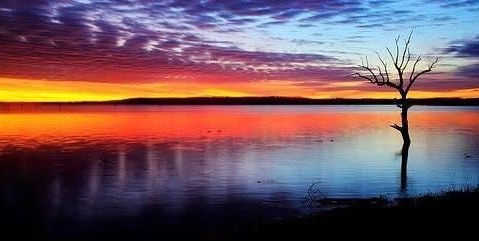
Kariba itself is one of the world's most beautiful lakes and the largest man-made lake by volume, stretching some 250 kilometres long. Generally, it has simmering calm waters that offer great fishing, provide stunning sunsets, and wonderful game viewing. On its shores, vast numbers of wildlife graze the torpedo grass, which flourishes as the water rises and falls each year, which in turn provides food for the fish. But like everything in life, it is not always as it is portrayed in the promotional pictures. I have fished in the ocean and Kariba many times, with the most frightening times I have experienced being on Kariba. It can change from a beautiful calm to a cauldron in no time, minutes in fact. There is no real swell on Kariba as such; the waves, though, can reach over two metres, and their unpredictability often creates a maelstrom of choppy water. Deadly for small boats, which generally head for shelter on the shoreline at speed; most having powerful outboards. Not so the subsistence fishermen, including those on the kapenta rigs; they have to weather the storm, and yes, there are many deaths. Seemingly over thirty in the last twenty years; that is those counted, not all. Even the large houseboats are wary of the weather, and we have often sheltered for several hours before continuing our journey on the lake. Three following events come to mind over and above the time I nearly drowned by swimming from Peter Anderson's float plane to the Sea Lion ferry for a beer resupply. I recounted this particular tale on an earlier blog. The Sea Lion is privately owned and well maintained, and we stopped there and swam for a beer resupply. Luckily, an old army buddy of mine, Jeremy Eastwood, came to my rescue, getting me safely back to the float of the plane with three beers firmly gripped in each hand. I often reflect: was it the beer or me he was intent on saving?

The other events are briefly as follows. Shortly after Independence, a group of my friends, including the late Henry Bezuidenhout, a farming neighbour, Keith Boshi, owner of the renowned Tipperary bar and restaurant, Tys Visser, a horse trainer at Arden Park, my in-laws' farm, and I hired the now-late Bob Cary’s houseboat, a mono-hull. Bob would later become my father-in-law, and he took us up the lake to fish in the Sengwa River, in the vast western basin.
“Remember, the best fishing is always on the other side of the lake, river or bay. It does not matter what side you are on at the time.”- Peter McSporran
Bob’s boat, the Lord Malvern, had been used as a base ship during the war and still had top electronic kit, such as radar and sonar, which let him travel at night. It was used to deploy troops during the war on both sides of the lake, or for patrol. So the first day we left, we left Anchorage Marina at Kariba late and travelled through the night until, on entering the western basin early the next day, some 90 kilometres from Kariba Town. A storm blew in and Bob, using his experience, quickly took us into the shelter behind Paradise Island. We were later to learn another mono-steel-hulled boat sank in that storm. Someone's stupidity left a hatch open. If you are wondering about the size of these houseboats, mono- or pontoon-hulled, they weigh anything from forty to a hundred tonnes. Anyway, we were to learn another boat sank that day, luckily with no loss of life. When I invested in a share in my own boat, The Shenga, it was something I always remembered: safety, as our children were most with us, especially during school holidays. The next incident occurred on an extremely hot afternoon in the mouth of the Ume River in the Eastern Basin just below Bumi Hills. We had left the shore to catch what little breeze there was; 40°C is not uncommon on Kariba, and we were joined by Tony and Helen Leckie. Tony had worked for me as a manager but by then was farming in his own right, when our captain, Pharaoh, came to us and pointed to a large dust storm approaching the lake from the Matusadona Mountains. Tony was in his tiny fishing boat, a Mini Glider only 10 ft long; he had even crossed Kariba in it. He and his wife, Helen, quickly jumped into our boat while Pharaoh secured our fishing boats, known as tenders, which we always towed behind the big boat, started the engines, and turned towards the oncoming wind. Too late, the wind caught us abeam, listing our 45-tonne vessel over until the deck almost became the waterline. Luckily, as we swung into the wind, she righted herself, and we weathered the storm, which only lasted about ten minutes.
The final incident isn't about rough weather, but about a wave phenomenon that occurs on Kariba. It was after we had moved to Zambia, in the early 2000s, and Rozanne and I, along with some friends, Rob and Leslie Duncan, Phil and Lee Vermaak, Dave and Coral Baxter, Dave being the director of Blackfordby College when I was chairman, along with Leslie’s dad, the ex-Army Commander General Sandy McLean. All still living in Zimbabwe at the time, we hired a large pontoon houseboat with excellent accommodation, partly because of the general’s age. Anyway, one hot afternoon we were all out in the tenders fishing, with the lake flat calm when someone said, “What is that?” pointing to the horizon. Looking up, we saw a distinct line moving toward us; bear in mind there was little wind at the time. That would come later. As it got closer, we could see it was a small tidal wave, something none of us had seen before or expected to ever see on Kariba on a calm day, so we quickly untied from the tree, which we used to anchor us to our fishing spot and turned the boat's bow towards the oncoming wave, which, when it arrived, we luckily rode easily. Following this, we were all in disbelief and thought we'd better get back to our houseboat, which was moored behind Spurwing Island, only to find the wave had lifted the boat onto the shore, having caught the crew unawares, but who probably would not have known what to do in the event they saw it coming. Rozanne was the only one to have seen the phenomenon before, which I believe could be caused by a localised earthquake in the area since Kariba was built, or by another wave unique to Kariba called the 'seiche' wave. We then fruitlessly tried to pull the boat off the shore using its engines and our small boats. Then, out of the blue, one of my closest friends and neighbours arrived with his wife, Joe and Wendy Whaley, whose boat had stayed afloat and offered to help us refloat ours. To no avail, it was firmly grounded, all sixty odd tonnes of it. We finally gave up and Joe and Wendy, who were on Rob Beaton's large boat, offered to carry us back to Kariba the next day. I never found out how they managed to refloat that boat. Well, there you are; I have written something totally unplanned this week, the first being a bit of a tirade about corruption, maybe the remainder was more interesting. The ferry disaster reminded me of many incidents on Kariba, none serious, luckily; hence this week's subject matter, because most people in the Western world do not see corruption as a matter of life and death, as it often is to many in this world.
Disclaimer: Copyright Peter McSporran. The content in this blog represents my personal views and does not reflect corporate entities.


Comments