


More Farewells and The Re-Kindling of Fond Memories and Some of My Best Times.

It has been very hot here in Portugal over the past week, with 35°C the daily norm. Last night, Sunday, one of my expat friends and nearby neighbours, Michael Kemper, who lives a couple of villages away, came for a whisky. He brought the rather nice cigars, and I supplied the malt whisky, a Talisker in fact. Michael is not too fond of my favoured strong island peats. As usual, we had one of our philosophical conversations as we watched the sun go down in the silent evening. Where we live, it gets very quiet in the evening, unlike in Africa, where the guinea fowl would noisily argue over their roosts and the quail and francolin told everyone that night was approaching. I can still smell the evening dust and hear their calls. Add to that the grunt or cough of a Brahman bull, and it would take me back to the farm in my memory musings. Maybe our conversation is only philosophical in our eyes, but our chat is always a bit wider than the local gossip. Michael is German and has previously been a senior executive at both Mercedes-Benz and BMW, with his career taking him to South Africa and Brazil. In his youth, his favourite pastime was mountaineering in Bavaria; now he keeps as fit as he can by cycling, using a battery for the steep hills. At our age, the conversation often turns to our current health problems and how our view of the world is probably antiquated, but it is how we see it. To say we are slightly confused by the world and the younger people that now run it would be an understatement. To a certain extent, we both use AI but have little understanding of how it works. Recently, we have exchanged books; the latest one to him to read was from my son Selby, written by Tim Marshall, titled The Prisoners of Geography, while in exchange Michael has given me one on Putin, by Steven Myers, which is a hard read but has given me an insight into where Putin came from and made him what he is. In summary, based on my reading of him so far, I describe Putin as a cold fish, and he is unlikely to seek peace without getting what he wants in Ukraine. any alternat will lead to his downfall. Anyway, with us both having lost close friends, we philosophically talked about life, our individual vulnerability, and the acknowledgement that we are unlikely to contribute to the well-being, or, for that matter, the detriment, of mankind in the time we have left.
We also talked about old friends, and sadly over the past two weeks I lost two, both having some impact on me in different ways, but both definitely part of the web that made up the fabric of my life. I will start with Daphne Powell, who passed first and whom I kept in touch with right up until the night of her passing. She spoke to me many times as her death approached. The other person to leave us is Bill Biller, a well-known face in farming circles, especially in the Nyabira district, and in the show ring at the Harare Agricultural Show. Unfortunately, I have not been in touch with Bill for many years; I went North to Zambia, and he went south to South Africa.
"Time and tide waits for no man."" - A saying going back to the times of Chaucer
After Michael left, I thought to myself, time is like the tide; it is both relentless and beyond man's control. But unlike the tides, time never goes back to reveal what it has covered. With time, it is gone forever; that is the past, leaving only memories. That brings me to this week's subject: the loss of two friends, leaving me only with my memories of them, although their faces are etched into my subconscious, appearing unexpectedly from time to time.
I had known Daphne’s ex-husband, Sir Nicholas, from my days at the Commercial Farmers Union when he was a coffee grower in Chipinge, in the Eastern Highlands of Zimbabwe. Chipinge is probably one of the prettiest part of Zimbabwe, with mountains covered with mists and rain forests, while beow tea and coffee plantations are nestled on the lower slopes and in the valleys. Daphne’s father, Major Errington, ranched in Matabeleland, as did the family of her best friend, Peter Horsman. Daphne met Nicholas, an ex-Welsh Guards officer, when he was working as a lowly assistant to an assistant manager at Central Estates, a large ranching company in the Rhodesian Midlands. In 1972 they took a gamble and moved to a rather dilapidated farm, Petronella, in the Chipinge area. They struggled to develop it into a successful coffee estate, but they did, and by 1976 they had planted enough coffee to benefit hugely from the coffee boom enjoyed by the world's coffee growers, at the expense of Brazil, which had a disastrous coffee crop that year due to black frost. Coffee hates frost. Nicholas had always been an adventurer and was not shy about catching a lady's eye, and when this huge windfall arrived, as did many coffee growers, rather than put it away for the difficult times, he spent it. Most farmers spent it on tractors and farm improvements, but not Nicholas; he bought racehorses, a large Mercedes, and permanently rented a suite at Meikles Hotel, Salisbury, to use when he was in town to watch his horses run at Borrowdale and for other social activities. In truth, Nicholas could be deemed a modern-day swashbuckler, up for adventures of any kind, and he enjoyed life to the full, willing to take any challenge or risk he faced. He and a very good friend of mine, Dave (Gravy) Scott, were close, spending much time in the bush together, camping under the stars. Nicholas and Daphne had two children, James, now farming in Tanzania, who has inherited the Baroncy, and Catherine, known as Nubby by most, who flits between her home in Zimbabwe and the UK, where she kept an eye on her mother while at the same time working to sustain her planned return to Zimbabwe. Daphne eventually grew tired of Nicholas’s adventure and left him, and by the time I met her, she was a declared lesbian.

I first met Daphne when she walked into my office on the farm for an interview after I placed an advertisement in the Farmer Magazine for an administrative assistant to help Karen Steyn in the farm’s office. It soon became clear to me she did not have the skills to fill the advertised vacancy. As I spent so much time off the farm, the cattle were being neglected, especially as I spent quite a lot of time the little time I had with the pigs early each morning and late in the afternoon. As for the crops, we had a good team of professional managers. What I needed was someone to oversee the cattlemen, make sure the numbers tallied at every dip day, a once-a-week event, and, now with the introduction of traceability, ensure all newborn calves were tagged and duly registered for both our records and the state veterinary department’s traceability requirements. For most, this was an arduous task; the advent of electronic tags and digital recording has made it much easier these days. So I, on a spontaneous whim, offered her a job with the cattle, and she surprisingly agreed. I am sure we both wondered whether this was a good idea at the time, but we duly collected her belongings from the Brown’s farm in Glendale, where she was residing and moved her into what was known as Mede Cottage on Mede Farm. It was a very basic cottage, but she made it home. She did require a second bathroom as hers was very private, but she got on and decorated it as her own. She covered the walls with pictures, obviously many inherited from her family, along with rather risqué ones in her bedroom and toilet. As it turned out, despite having no experience, she was excellent at her job, learning quickly as she went along and never shy about asking for advice. She loved the cattle with a particular fondness for the budding Droughtmaster herd. She worked seven days a week, taking time off only to do her shopping or for rare social events. She, not unlike Nicholas, was also a bit of an adventurer and the one time she did take off, she travelled overland on her own all the way to Kenya. A brave thing for a woman to do. There is no doubt Daphne was eccentric, as Gravy reminded me when I informed him of her passing, but I enjoyed nothing more than spending an evening with her by her fireside drinking a whisky while she had her daily partial spliff. The fire burned twenty-four hours a day, three hundred and sixty-five days a year, large in winter and only smouldering in summer. When we lost the farms, she was ‘Jambanjed’ and fled the farm in fear for her life after a particularly nasty incident. Thereafter, she moved to Portugal, as did her good friend Peter Horsman, along with my other dear friends, the Hamp-Adams ladies Sally Sandeman and Jane Crossman, and much later myself, partly because they were all there. In Portugal she found an income by supervising the maintenance of other people's properties. Shortly after arriving in Portugal, she survived cancer but continued to work until her sight finally failed, making it impossible to drive and therefore work. She then returned to England, Cirencester, in fact, although for a while she cared for her sister, also a Lady married to some Lord whose family had made a fortune for making the tiers to secure railway lines to the sleepers. I cannot remember his name but the one evening when they were visiting Daphne at Mede Cottage, a big difference from their large mansion in the UK, her sister and I had a difference of opinion, and she turned to Daphne and said, Daphne, I suggest you throw this rude man out of your house, with Daphne retorting, “I will do nothing of the sort because it is his house”. Daphne and I had many great times together and, from time to time, would meet up, often with Jane Crossman facilitating. In recent years, she has been in severe pain, hardly mobile, and almost totally blind and recently she said not only is her hair falling out but also her teeth. Rozanne also loved Daphne, and it is with great sadness that this brave, resilient lady has left us. From her life, although a few days before she passed, she sent me this very moving voice message; she was too blind to type or read text and was nearing the end.
“Take care, darling Max, and Roxie. I shall be around with you, Max, chasing you up and following you around, and I wish you the very, very best.” - Lady Daphne Powell to me a few days before her passing.
Goodness, I will miss her; she was so much a part of my life.
Getting onto Bill, who I was not so close to but still counted as a friend and had strong connections with his family. Bill was one of those people who treated farming as a profession, and rather than farming on his own, which he could have done easily, he decided to remain as a manager, and I should say a very loyal and trusted one to the people he worked for. I got to know him when he worked at Ballineety; the late John Glanfield had been the owner, a crop farmer, a rancher, and a renowned breeder of pedigree Sussex cattle. Upon John’s death, his daughter, Cathy Townsend, took the reins rather than his son. I have no idea about this, but I do know Cathy was a keen farmer and also had a love for Sussex cattle. Under Bill, the farm continued as before, ne’er a hiccup and while Cathy took an interest, the management of the large enterprise was very much in Bill’s hands. As Alistair Smith said in his condolences, a past neighbour and Chairman of the cattle section at the show, everyone interested in cattle will remember the great cattle Bill turned out year after year in the fatstock section, always accompanied with his wife Cornelia and his smile, in fact, more often than not his laughter. Many beers were shared at the Farmers’ Co-op stand overlooking Smithfield. Such memories.
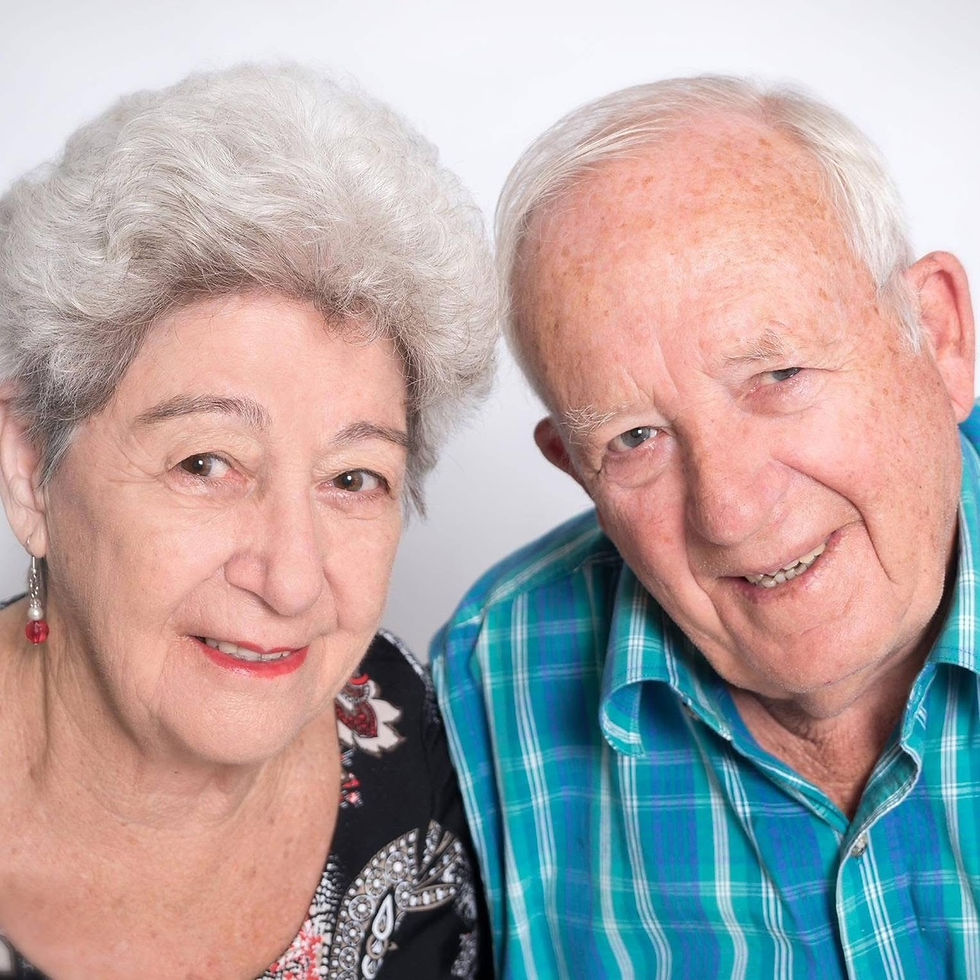
We even became more acquainted when his eldest son, Tommy, came to work for me as the manager of my Mazowe farm, Rydal. As both our farms had limited mechanical harvesting needs in the form of wheat and soya beans, as the maize was harvested by hand for seed or whole corn and cob for cattle feed. My main crop on Diandra was tobacco which was and still is harvested mainly by hand. But it was a pain trying to get the harvesting contractors in at critical times, the wheat before the quelea ate it, and the soya before it was lost due to shattering. Then Cathy and Bill approached Tommy and I suggesting our two companies should share a combine harvester, even then a major outlay for our cropping program. I am sure that Bill was the instigator of this, at least him with the aid of Tommy. This we did and Cathy with Bill proved to be excellent partners, Bill’s pride in the maintenance saved much expense in the running of the machine, a large Claas. Towards the end of our time on the farms Andre, Bill’s youngest son came to manage a farm. Alistair Smith and I leased together. So both Bill’s sons were working for me when we lost the farms. We lost our farms, they lost their jobs and sources of income and as you can imagine there were no farming jobs so all reverted back to trades their father had insisted on them completing before farming.
It would be wrong for you to think I am not a little melancholic writing this, but I am afraid it is often so when we think of the people that made up part of your life in so many different ways. When I think of Bill, the Glanfields and Ballineety I always think of Runyard Kipling's poem about Sussex cattle, especially the last line about the sunset.

‘Now the Herd is lost in darkness, and I bless them as I leave, My Sussex Cattle feeding in the dew!’ - Runyard Kipling
Disclaimer: Copyright Peter McSporran. The content in this blog represents my personal views and does not reflect corporate entities.


Comments